

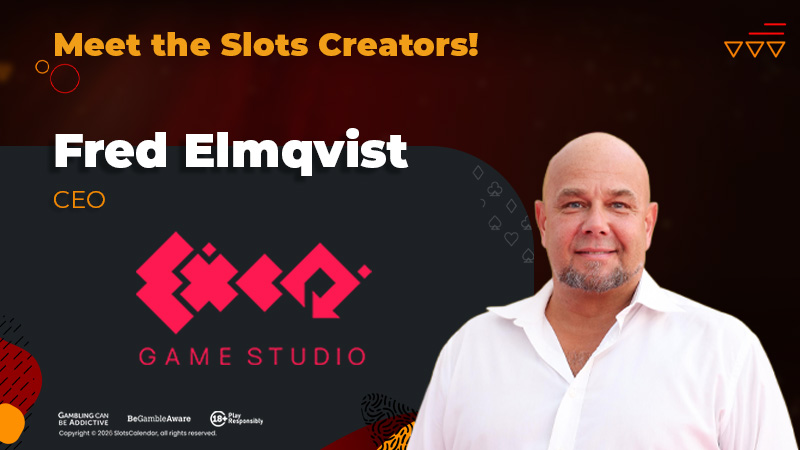
While many game producers are constantly hunting for KPIs and release schedules, EXCO Game Studio follows the most honest formula of all: building good games. As the company motto suggests, they are all about removing the clutter and finding value in creativity, valuable feedback, and mechanical soundness.
There’s no better person to showcase this approach than their founder and CEO, Fredrik Elmqvist. He sat down with us and gave us an insightful interview about what works best, his perspective on game production greatness, and what to expect from EXCO.
What was the moment you knew EXCO had to exist?
When it became obvious that too many games were being shipped without anyone really caring if they were fun. Things were getting optimised for release schedules and KPIs instead of gameplay. At that point, building another studio felt unnecessary, building a different one felt necessary.
EXCO comes from “Excommunicado”. What kinds of ideas get pushed out of slot development today, and why did you build a studio for them?
Ideas that are risky, uncomfortable, or hard to explain tend to get killed early. Strong mechanics, unusual pacing, things that don’t look like last year’s top performer. EXCO exists to give those ideas a home instead of sanding them down.
EXCO’s rule is “we only ship what we’d play”. What’s the most painful “no” that rule has forced so far?
Saying no to things that are “good enough.” Features that would have been easy to sell but didn’t actually make the game better. Those are the hardest, because they feel safe, but safe is usually boring.
You’re turning mechanics into a named system with GAMEX. Why is it important that mechanics have a language, not just features?
Because features disappear. Players forget them, operators forget them. If something matters, it needs a name and an identity. GAMEX is about treating mechanics as part of the game’s DNA, not just bullet points on a slide.
What’s the quickest way for a “branded mechanic” to become a gimmick, and how do you stop that risk early?
When it looks clever but doesn’t change how the game actually plays. We stop it early by testing aggressively and cutting without mercy. If a mechanic doesn’t affect tension, decisions, or pacing, it doesn’t survive.
VEGASCALINE was the debut. In the first minutes of play, what do you want players to understand about EXCO?
That this isn’t a reskin studio. The pacing is different, the escalation is different, and the game reacts to what’s happening. Players should feel that something is building, not just spinning.
The Robbin’ Goblins leans hard into pace and pressure. What changed in that game because of real feedback?
We removed friction. Animations got tighter, transitions got faster, and dead moments disappeared. Feedback showed us exactly where momentum dropped so we fixed it. The final game is sharper and more intense because of that.
You talk about cadence and no dead air. When a game drags, what do you fix first: animation timing, hit-rate feel, or feature frequency?
Animation timing. If the game feels slow, players assume everything else is wrong too. Pacing is perception, and perception decides whether someone keeps playing.
On launches, do you prefer exclusive drops or wide distribution, and what does each option break?
Both can work, and both can fail. Exclusives give focus but limit feedback. Wide launches give data but can dilute attention. We decide based on the game, not a fixed rule for us at the moment.
Which bonus types fit high-volatility, mechanic-heavy games, and which ones quietly distort the experience?
Bonuses that extend the core loop work well. Bonuses that reset everything usually don’t. If the bonus ignores what the player has learned, it breaks the experience instead of enhancing it.
Some markets come with heavier compliance and launch constraints. What signals make a market worth prioritising for EXCO?
Player maturity. If players understand volatility and mechanics, it’s a market we want to be in. Regulation matters, but player behaviour matters more.
You once backed building your own platform at Yggdrasil. Now EXCO is building on Tequity’s RGS. What’s worth owning in-house this time, and what’s better borrowed?
We own what defines the game: design, mechanics, pacing. Infrastructure should be invisible. Tequity lets us focus on making better games instead of rebuilding plumbing, plus they are our friends and I co-founded it ;)
If you could delete one slot trend from the industry, what would go first?
Endless sequels that add nothing. Familiarity is fine, laziness isn’t…
When EXCO is no longer the new studio, what do you want to still be true?
That people trust us. That when EXCO releases a game, it’s worth playing. Fewer games, but better games.
This interview was authored by Andrei Vlaicu, with special thanks to Fred Elmqvist for his invaluable contribution to the creation of this piece.