

Uniqueness through humor has certainly been a signature element of Thunderkick's creative process. However, reaching this producer’s heights as an independent studio requires much more than just gimmicks. Their quality-oriented and steady rate of game launches has proven instrumental in their ability to become a household name on the market.
Thunderkick has been an exceedingly fascinating name in iGaming, and the success of slots like Zap Attack, Esqueleto Explosivo, and Milk The Cow showcases that their process pays dividends.
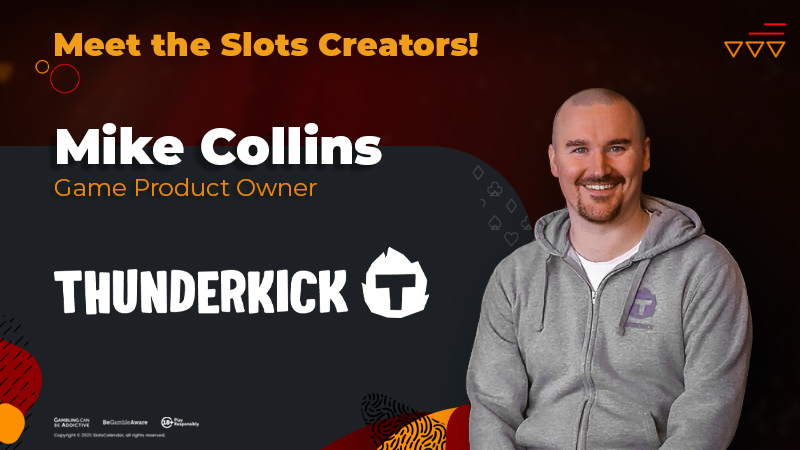
We’ve had the pleasure of discussing a slew of fascinating details on Thunderkick’s portfolio with the producer’s own Game Product Owner, Mike Collins!
Thunderkick has carved a reputation for off-beat humour and art-house visuals. Where does Milk the Cow push your studio DNA next, and what bigger portfolio gap is it filling?
Humour is an underutilised tool within the slots sector; comedic themes and artwork can be an attractive proposition for players looking for respite from the sea of eerie and intense games that have flooded the market in recent years. While we are not entirely reliant on humour, as it’s important to avoid becoming too one-dimensional, it has become an important weapon in our arsenal, and some of Thunderkick’s most popular games feature quirky comedy at their core.
The singing skulls in the Esqueleto Explosivo series, the dynamite-crazed explorer in Archie O’Loggins and the Enchanted Masks, and now, the jolly farmer and his livestock in Milk the Cow. It’s about delivering something light-hearted and fun. It’s an entertainment industry after all!
After debuting in Archie O’Loggins, you’ve doubled down on the Wild Field in Milk the Cow. What KPI—or player feedback—convinced you this feature deserved its own spin-off series?
We received overwhelmingly positive feedback about the bonus round in Archie O’Loggins, in which the Wild Field feature is a key component, which was supported by metrics such as session length and number of return sessions. In response, the aim was to make the Wild Field an even more integral part of gameplay in Milk the Cow, hence its inclusion in the base game. On average, two wilds will land more frequently than the bonus triggers, so integrating it in the base game ensures players have greater access to a feature that can facilitate bigger wins, in turn encouraging longer play sessions.
Thunderkick still opts for roughly one launch per month while competitors flood the lobby weekly. How does that cadence influence design decisions, QA, and ultimately long-term brand equity?
We are proud of Thunderkick’s independent status. In an industry where up-and-coming studios are increasingly being acquired by iGaming titans, our independence is what enables the team to consistently produce entertaining games that align with the brand’s vision and cater to market nuances.
However, this independence means we don’t have the budgets or personnel to develop and release two games per week, as is the case with some of the giants. For us, it’s about quality rather than quantity. The goal is to produce one game per month that has been through rigorous testing, iteration, and quality control, meaning we are fully confident that every release is the best Thunderkick has to offer.
Milk the Cow fuses two popular frameworks. Walk us through the balancing act—how do you keep volatility engaging without alienating your traditionally low-to-mid-volatility fanbase?
It is impossible to appeal to every preference within a single game, so we don’t try to. I would rather produce a slot that half of the player base rates 10/10, rather than a slot that the entire player base rates 5/10. What’s more important is curating a portfolio of content that is diverse, with varying RTP rates, volatility, themes, features, and payout structures. A game does not need to strike a chord with every player, but it is important that those players not catered for can find another title in your portfolio that is tailored to their preferences.
The bronze-to-gold meter in the bonus feels almost RPG-like. What inspired that progression loop, and how did you iterate to find the sweet spot between grind and gratification?
There has been a trend toward RPG-style elements in iGaming as the industry continues to innovate to capture the attention of new audiences. We have been experimenting with progression loops during development cycles, and the addition of bonus meters felt like a natural inclusion in Milk the Cow. As the meter levels up from bronze to gold, so too does the value of the multiplier, which enhances anticipation for the player. This win potential ramping up in front of the player’s eyes elevates the game’s stickiness as they hunt down bigger rewards.
From devilish jalapeños to alien overlord Klong, Thunderkick’s gags are rarely skin-deep. What internal checklist ensures a joke serves gameplay rather than distracts from it?
Consistency is crucial. Striking visuals on a thumbnail can be pivotal in helping a title stand out in casino lobbies, but if there is no continuity, it can result in a disjointed experience. The comedic value of Milk the Cow is on display throughout, from the increasingly jubilant cattle and farmer to the milking process that showcases the final bonus payout. Synergy is important with any theme or game aspect, not just comedy.
You’ve explored space (Zap Attack!), Day of the Dead (Esqueleto series) and now barnyard chaos. Which untapped setting excites you most—and why might MeJUICEa be the next left-field turn?
Casino games have been around for a long time, and as a result, there aren’t too many themes remaining that are entirely unique. So, rather than searching for something that hasn’t been done before, it is equally viable to explore and reinvigorate classic settings. MeJUICEa is a prime example. Greek mythology has been a mainstay in slots for decades, but we aimed to breathe new life into the theme with a modern makeover on the famous Gorgon, which we hope gives the genre a new lease of life.
Which engagement hooks (mission ladders, meta-collectables, timed jackpots) have proven most effective at converting Thunderkick one-off triers into sticky, high-LTV cohorts?
While we don’t currently create progression ‘state’ games that evolve over multiple rounds, our data analysis confirms that mechanics such as collection meters and on-screen collectables increase a game’s stickiness and the subsequent return rate of players. This becomes especially impactful when they are deeply integrated into a game’s narrative and core mechanics, such is the case in MeJUICEa.
The aim is to strategically tease the potential of larger rewards, such as a bonus game or global multiplier, with this sense of momentum and anticipation helping maintain engagement throughout longer sessions. Ultimately, it’s about enabling players to foresee future potential should multiple conditions be met.
How do you ensure a 5,000× max-win game like Milk the Cow still earns Twitch airtime alongside 100,000× behemoths?
There are plenty of games with huge 50,000x and 100,000x win potential, but how often do those payouts actually drop? Max wins between 5,000x and 10,000x feel more achievable to the player, and this naturally drives greater engagement. The infrequency of these major moments means it is vital to make the everyday session as entertaining as possible. It is a memorable base and bonus play that gives a game longevity.
Jokes don’t always translate. How do you localise comedy beats for Latin American vs. Nordic vs. Japanese audiences without losing Thunderkick’s voice?
The initial focus should be on conveying a joke visually, as opposed to through written language. Thunderkick utilises quirky characters and animations, such as Archie and Medusa, to express the spirit and charm of an environment, as graphics can be universally appreciated regardless of language. It’s also important to avoid niche references when targeting global markets. For example, in the UK, we have several puns and phrases that are unlikely to be understood elsewhere, and shoehorning them into a game would result in jokes failing to resonate. It is all about empathy and creating humour that will appeal to a culturally diverse audience.
Some studios push social-casino soft launches for math proofing. Does Thunderkick run similar sandboxes, and could AI soon help auto-tune reel strips or symbol probabilities?
Thunderkick does not use external sandbox-style math proofing. While there’s no rigid or standardised process, we do occasionally perform small-scale internal A/B testing when appropriate, allowing us to fine-tune specific mechanics. As for AI implementation, I think it is unlikely to be a viable approach in the short-term, although that’s not to say it won’t be possible in the future. It would require a complex and well-trained model based on a variety of contexts, and as a result, it is currently more efficient and accurate to use a solver, or simply build manually. Human perception is visually driven, and AI struggles to recognise aesthetically pleasing sequences as successfully.
Can you tease one mechanic in development that would be technically impossible on a classic 5×3 grid?
I like to think of the impossible as a challenge. There isn’t necessarily any specific game in development currently, but we do have plenty of wacky ideas and prototypes in the ideation phase. Anyone who knows me is aware of my love of hexagons, a layout that is technically impossible with a 5x3 grid. However, I’m exploring the possibility of unique mechanics that harness the benefits provided by a hexagon format – watch this space!
You’ve said ideas can start on bar-napkins. How do you formalise that creative chaos into a repeatable, on-time production cycle without stifling spontaneity?
Good memory…I did say that! At Thunderkick, it begins with creative ideation meetings and game jams, where there are no boundaries or judgements. Each new viable concept is attributed to a clear category, either by payout algorithm, theme, narrative, etc., which is then transferred onto digital paper, and the game designing process begins.
I adopt a failure-friendly approach when prototyping, and it is immediately evident if an idea works during this process. Spontaneous tweaks are a natural and welcome part of the process, and once it is clear a concept has legs, we push forward into the development phase, where we try to avoid diluting the original idea by over-designing. From concept to completion, the vision must remain crystal clear.
Fast-forward five years—what headline would you love SlotsCalendar to write about Thunderkick’s impact on the industry, and what milestones must the studio hit to get there?
Thunderkick’s goal upon inception in 2012 was to shake the industry up. Fast forward over a decade and we remain fiercely independent, are closing in on 100 employees and a century of games, and continue to champion creativity and passion at the heart of everything we do. In another five years, I expect the team to have grown further to mirror our commercial expansion, and I hope that players across the world associate Thunderkick with high-quality entertainment.